 |
 |
 |
| Главная Журналы Популярное Audi - почему их так назвали? Как появилась марка Bmw? Откуда появился Lexus? Достижения и устремления Mercedes-Benz Первые модели Chevrolet Электромобиль Nissan Leaf |
Главная » Журналы » Preparation instrucnons requirements 1 ... 18 19 20 21 22 23 24 ... 43 1. Loosening of particles or parts that may become lodged in circuits or mechanisms. j. Excessive electrical noise. 1-3 GUIDELIMESJfOBJETERMIMIWa TEST PHDCEDUIES ASP ТШГ 001Ф1Т10Ш. ЖГГЕ: The tailoring process as described in Section 4 of this docisnent shall be used to determine the appropriate tests and test variables. a. jtoplieation. This method is int.ended for all types of military equlp nent except as noted in the forevvord to this standard. b. Restrictions. None. c. Seovience. Vibration testing may be performed anytime in the test program. Tbe accumulated effects of vibration-induced stress may affect equipsaent performance under other environmental conditions, such as tenperatxjre, altitxjde, hunidity, leeage or EMI/EMC. When it is desired to evaluate the cvsiulative environmental effects of vibration axxi other environments, a single test item should be exposed to all environmental conditions, with vibration testing generally performed first. d. Test variation (1) Test appeoatus. (2) Test item configuration. (3) On.-off state of test itea. (4) Vibration spectrisn and intensity. (5) Duration of exposure. (6) Axes of exposure. (7) Location of accelerometers. 1-3.1 Choice of test procedures. The choice of test procedure is governed by the vibration environments to be tested for. These environments should all be identified during the part cf the tailcririg process described in General Requirements, 4.2.2. Table 514.4-1 divides vibration environments into twelve categories-three transportation-induced and nine appl ication-induced. Procedure I is used for testing an item to nine of these categories. Procedures II. Ill, and IV are each used for one of the three remaining categories.
4>- m i c: w Г' H о i - 00 co о 1/ iMs<j niferred to as equipment categories . 2} The provisions of section 1-4 a}ply to all vibration te<;ts. У iSecmred cargo. Cargo wtiiich is securely Hied or bloclced in all iLhr(>e iixes wilth respect to the bed of the triinsponi vehicle. 4/ ILocise cargo. Cargo which is not tied, hllockrd, or restreiined when plnced on the hed of tihe transport vehicle. i/ Restrained cargo. Cargo which is blocked or lied in iilie iwo horij.omial axes wiih respeci to ihe bed of th transport vehicle. An item should be tested to a category when the item is either: a. Intended for use within that category as a mission requirement, or b. Expected to spend a significant portion of its service life within that category as a conseqvssce of its deployment, storage or use. An item will probably be tested to more than one category. For exanple, equipment installed in jet aircraft is covered by categories 1 (Basic Transportation) and 5 (Jet Aircraft/Tactical Missiles) and may be tested in both environments. 1-3.1.1 Conparison of enviropjn&ntg prior to test 1-3.1.1.1 More than one application environment. If an item is expected to encounter more than one vibration environment as a consequence of its intended use, the environments should be conpared. If any of them would aiiply Similar stress levels or similar bandwidths. the most severe category test should be applied sis representative. 1-3.1.1.2 Transportation and application environments. If the transportation vibration levels are more severe than the appl ication-induced vibration levels, as is often true for ground-based and some shipboard equipment, both transportation and platform vibration tests should be performed. This is because the transportation test is performed with the equipment nCToperating * d the platform test is t>erformed with the equipment operating. If the application vibration levels are more severe than the transportation levels, further analysis must be performed to conpare the fatigue potential of both environments over the life cycle. If the platform enviroriuSBnt is still found to be .тог© severe, the tra.nsportatio.n test can be deleted. 1-3.2 Choice of related test conditions. Guidance for setting test values is given below with the discussion of each vibration environment category. The provisions of section 1-4 apply for each test designated under this method. A test for restrained cargo is not included in the categories below. Such a test nay be devised by using field measiirements to tailor the most appropriate procedure. 1-3.3 TRAMSPOBTATION VIBRATION 1-3.3.1 Category I - Basic transportation 1-3.3.1.1 Application. All equipment shipped as secured cargo by land, sea or air will encounter this environment. The land mobile environment characterized by broadband vibration resulting from the interaction of vehicle suspension and structures with road and surface discontinuities. Representative conditions experienced on moving materiel from point of manufacture to end use is depicted in Qeneral Requirements, figure 2. This environment may be divided into two phases, conxnon carrier transportation and mission/field transportation. CcinnQn carriar- transportation is ussveissnt froui the msnufact-urers plant to any continental United States storage or user installation. This nevenaent is i uaily acconplished by large truck and/or tractor-trailer combination. Mileage for this transportation generally ranges from 2000 to 4000 miles over inproved or paved highways. Mission/field tramsportation is that moveinent of materiel as cargo vmere the platiorm may be two wheeled trailers, 2-1/2 ton to 10-ton trvicks, semitrailers, and/or tracked vehicles, IVpieal distances for this phase are 300 to 500 miles. Road conditions for mission/field support differ from the comnon carrier in that, in addition to the paved highway, the vehicles will traverse uninproved roads and unprepared terrain (off-the-road) under con)bat conditions. 1-3.3.1.2 Test levels. In the development of the vibration test it najst be determined if the test item will experience the conxnon carrier, mission/field, or both transportation environments. Whenever possible, measured data should be collected on a variety of large conventional trucks, semitrailers, forklifts writh shipping pallets, and conventional flatbed transport vehicles used in the coninon carrier environment with a realistic load configuration of 75% oi the vehicle load cajacities by weight. Fcr ths mission/field envircnnsnt data are required from typical tactical vehicles, to include: two vfaeeled trailers, 2-1/2 ton to 10-ton trucks, semi-trailers, and any tracked vehicle capable of or used for transport of cargo. These data shall then be used to develop test spectra. (See (Reference 55)as an exanple). For test items that will only be transported via ccnison carrier, test levels агЛ conditions shall be derived from the measiired data of the conxnon carriers or from figures 514.4-1 through 514.4-3. carrier environment. These figures are based upon data measured at the cargo floor of seven different configurations of trucks aind tractor-trailer conbinations. Both conventional suspensions and air-c\ishioned suspensions are represented. The data were collected from typical interstate highways with rough portions as part of the data base. Test items that will eiqperience both transportation environments should be tested at the higher levels associated with the mission/field transportation. The levels for this environment can be obtained from tables 514.4-AI through 514.4-AIII. Representative spectral shapes of wheeled (or two-wheeled trailer) and tracked vehicle environments shown in figijB>es 514.4-4 and 514.4-5. The test must be developed from a typical misslcn/field transpcrtaticn scenario tc obtain the proper mix and representative eoafcination of platform, and mileaige requirements. Although both trucks and tvuo-wheeled trailers are utilized between the Forward Supply Point (FSP) and the using unit and at the using unit, the vibration levels on the trailers are significantly higher amd thus should be used to represent the wheeled vehicle environinent. isiless the test item is too large to fit in the twO-weeled trailer. In that case, the crasposite iheeled envirorjasnt ahould be used. 1-3.3.1.3 Test durations. The test duration for Basic Transportation should be based щюп total miles of expected transportation where 60 minutes in each axis is equivalent to 1000 miles. (See Beferenoe 55 for guidance). The two-tdieeled trailer spectra (table 514.4-AI) have a test dwation per axis of 96 aiinxites per 32 miles; the heeled vehicle spectra (table 514.4-AII) have a test duration per axis of 120 minutes per 500 miles. The total test time per axis for the M548 tracked vehicle spectra is 60 minutes per 16 miles. Each axis (table 514.4-AIII) is conprised of test phases writh specified test times per phase required to accoimodate the total swept narrowband random-on-random environment. These durations are derived from the mileage for a typical mission/field transportation scenario which has been established to be 500 miles to the FSP; 16 Esiles from the FSP te the U3ir4 vsiit; and 16 miles at the Using Unit itself (dependent upon the type of cargo-, expendable cargo, e.g., anmjnition, may be hauled 16 miles and nonexpendable cargo, e.g., generators, may not be hauled at all once they reach the using unit). Figure 514.4-6 showe the typical scenario and the types of vehicles utilized most frequently in the various segments of the scenario. м 1 с к ftiratlw: 60 minute* г lOOCi miles .mn Own}} rms level: 1.04 G M991 Mm .mm .99190 .9992( SEE NOTE .вв91(! И- OB о - тмтпг? гт) PSD vBLuc: Ш . 1S09 .81see .99915 5.999119 19.9(199 20.99911 SI.9999 199.99(1 299. Freqiuencjr (Hz) 599.IB9(I NOTE: If the test Iten 1и resonant bielow 10 iz extend the curve to iltr lovest reisonant frequency. г i.,unr. 11 м. -1. flaaifi ijtiaiiafiQEJtaij.Qib. fiftfflaQn cftci:lfiJc nvjLc.oniBenV....v.crUcal. .axis. Ul 4.1 * JJ. <D l4 о T $t Duration: 60 mingles ( г miles .111И Ovenill rm$ level: 0.20 5 niCCf PSD vaiuC 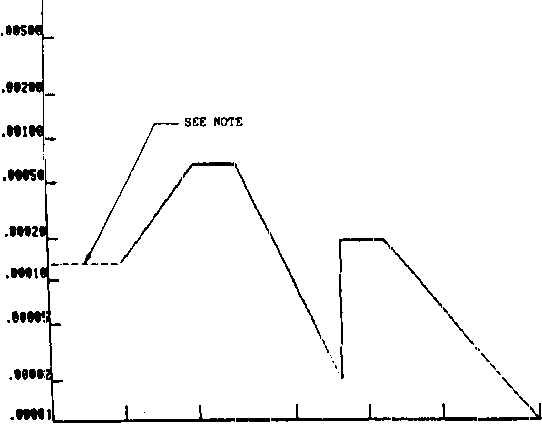 It за II21 .eiien .e 86s .eoeez .eoeii s.wiei ti.int zi.wiei si.WH tei.eeii гм.еие see.iiee frequency (Hz) НОТЕ: If the test item is ireaonant below 10 Hz extend Che cunre to the lowest resonant frequency. FIGURE 511 2 Raaln tranimHitrlltillnilli IIHI I 111 1Я и о IИМ Ouretlwi: 60 iMriutes par 1000 я11 .eiiBW coverall nws level: 0.74 6 .шее.. . НИ ..nrni 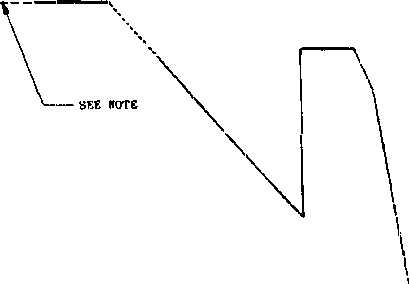 19 29 \29 121 200 240 340 S00 .006SO .0eftS .00021) .00309 .00309 .0tlS9 .0fil003 .0991S .0009 5.110099 10.0Ш 2I. 090 51.1099 199.001) 209.909 590.00 Freiquency {Ht) NOTE: If the test ll:en Is resonant below 10 Hz extend the curve to the lowest resoinant frequency. FIGURE 5i>i> 3- ;Biij:-Jj:ixiai]fij:!tJkiu-£smK2a-£iicx:l<u: eiUficmiuuik-lianftUJJuLiuUjbLU laL-STP-eiOE 14 JULY 1989 § 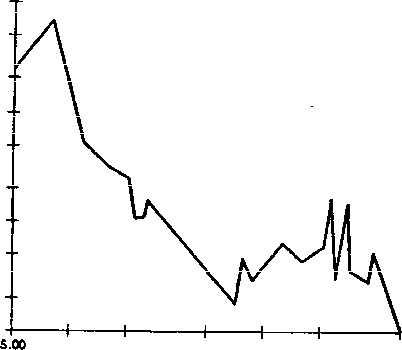 FREQUcNCTf (Hz) 500.00 FIGURE 51 A.4-4 Representative spectral shape, wheeled vehicle. с NB 2 NB = Narrow Band of Energy NB 1 6.0QQQ MR ч. 600.000 FREQUENCY (Hz) FIGURE 514.4-5. peenreeentet.ive goectral shape, tracked vehicle., ЬЕПНН) 514.4 1 ... 18 19 20 21 22 23 24 ... 43 |
|||||||||||||||||||||||||||||||||||||||||||||||||||||||||||||||||||||||||||||||||||
|
© 2026 AutoElektrix.ru
Частичное копирование материалов разрешено при условии активной ссылки |